How Aircraft Age Limits Have Inadvertently Stunted Indonesia’s Airline Industry
 Staff Writer,
20 Apr 2026
4 min read
Staff Writer,
20 Apr 2026
4 min read
Indonesia’s airline industry has failed to live up to its full domestic market potential – in fact the market has regressed – and government policy has played a part.
The country is still Southeast Asia’s largest commercial aviation market thanks to the fact it is the world’s largest archipelago with around 17,000 islands, and the world’s fourth most populous nation with around 288 million people.
Indonesia had 102 million domestic air passengers in 2018, according to OAG data, making it one of only five nations with more than 100 million domestic air passengers that year. The others were: China, the US, India and Japan.
But Indonesia’s domestic passenger market has declined since 2018 and now has around 70 million domestic air passengers per annum.
There are many reasons for this, such as a lackluster domestic economy and higher ticket prices; both of which have worked to stifle demand. Fuel accounts for 30-40 percent of an airline’s cost base, so higher oil prices have impacted ticket prices, as has the depreciation of the Indonesian rupiah to the US dollar.
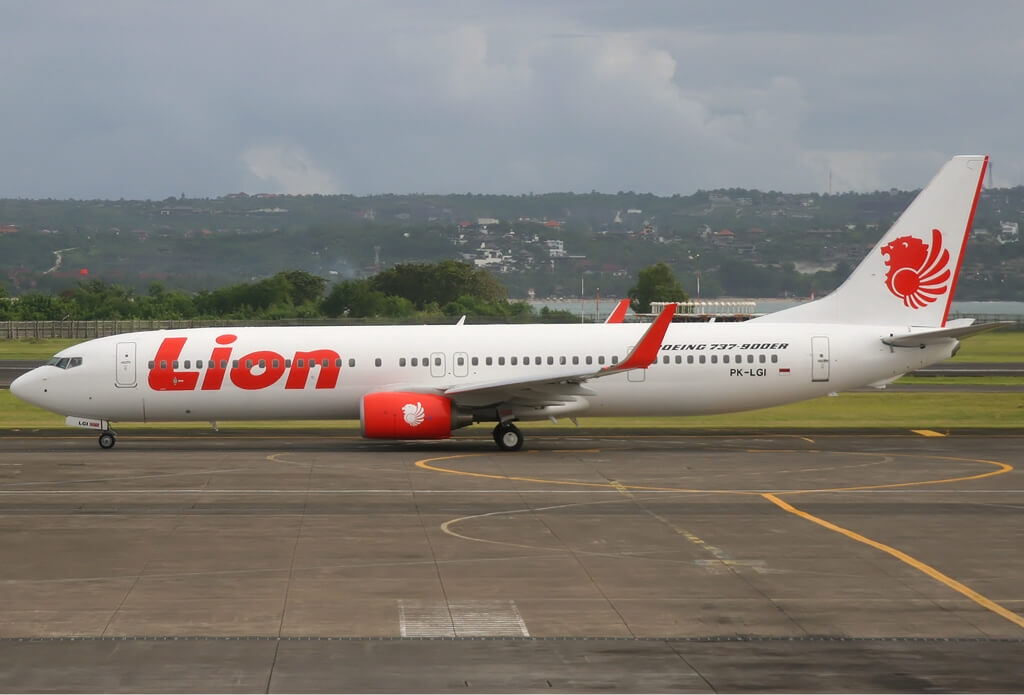
Another factor is a lack of domestic market competition. Lion Air Group – which operates Lion Air, Batik Air, Wings Air and Super Air Jet – controls 69% of the market, while Garuda Indonesia Group has around 20%, leaving the remaining 10% for Indonesia’s remaining, much smaller, carriers to fight over.
Indonesia effectively has an airline duopoly now, but it was not always the case. There used to be many others, such as: Mandala Airlines, Sky Aviation, Xpress Airlines, Merpati Nusantara Airlines, Kartika Airlines, Batavia Air, Adam Air and so on. But all these competitors eventually exited.
A factor that has contributed to the lack of market competition in more recent years is an Indonesian government policy, introduced in December 2016, that limited the age of commercial passenger aircraft imported into Indonesia to 15 years. The government in May 2020 raised the age limit to 20 years, but this is still insufficient.
It still greatly restricts the type of aircraft Indonesian carriers can import into the country. All of the Boeing 737 ‘classic’ range are older than 20 years. Indonesian carriers wishing to operate 737s must use the 737 ‘next generation’ series or the 737 Max. There is also the Airbus A320-family.
But 15-20 year old A320-family or 737 aircraft command quite high lease rates, especially in the current market context where there are very few aircraft available for lease.
In the regional aircraft market, the 20-year age limit means Saab, BAE Systems, Fokker and Dornier 328 aircraft are forbidden. The only western turboprop aircraft that qualifies are de Havilland Aircraft of Canada Dash 8-300 or Dash 8-400, and the ATR 42-500/600 or ATR 72-500/600.
ATR and de Havilland Aircraft of Canada aircraft less than 20 years old command reasonably high lease rates for their size. This culminates in a situation where airlines need to have high aircraft utilization to cover lease costs.
To thrive, Indonesia’s smaller carriers need to find a niche. To achieve that they need to have the opportunity to operate different aircraft types, to the dominant incumbents, giving them some unique capabilities that Lion Air Group and Garuda Indonesia Group are unable to match. To make that possible, Indonesia needs to do away with aircraft age limits.
Thailand also had a limit on the age of aircraft imported into the country. But in January of this year, it did away with the 16-year age limit for importation of commercial passenger aircraft.
Instead the Civil Aviation Authority of Thailand assesses whether the aircraft is airworthy. It does this by: examining the condition of the aircraft, checking the maintenance records and ascertaining whether the aircraft operator can properly maintain the aircraft. This approach is in line with many other markets such as the US, Europe and Australia.
Thailand changed its policy, because it recognized that airline safety has nothing to do with the aircraft’s age, but rather how well it is maintained and whether there is proper regulatory oversight.
The country also knew it needed to change, as some Thai carriers were struggling to lease aircraft that met the age requirement. Thailand wants its airline industry to grow, because it recognizes that competition is good and that airlines are a key driver of economic growth. Hopefully, Indonesia will do likewise.
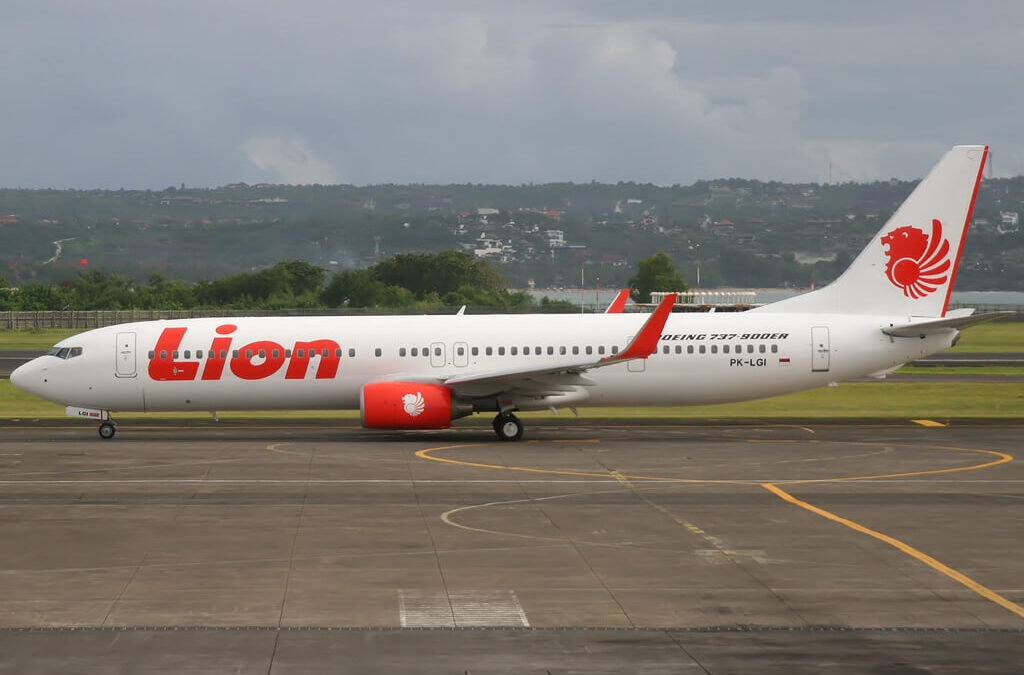
Feature picture, from Boeing, shows a Lion Air 737-900ER.