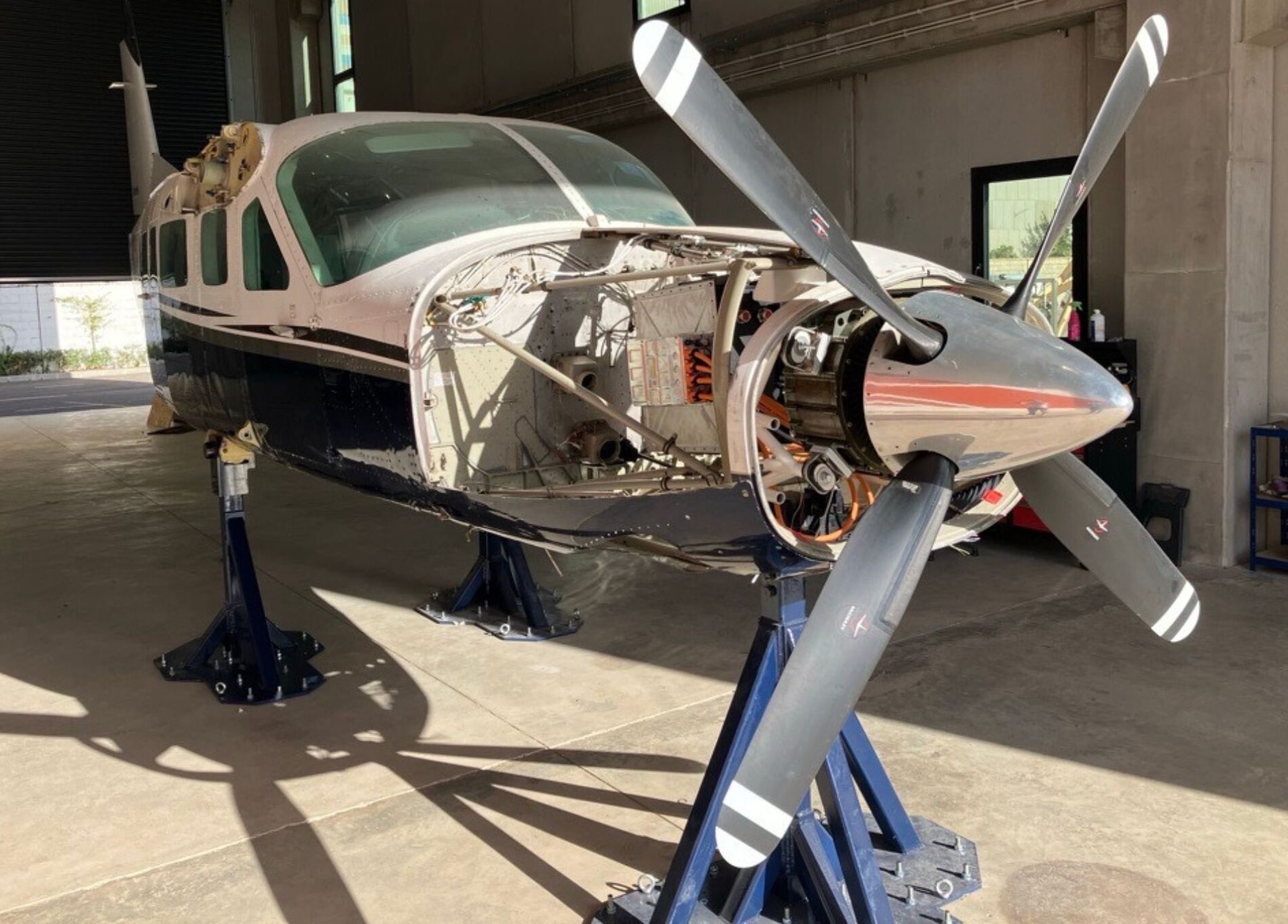
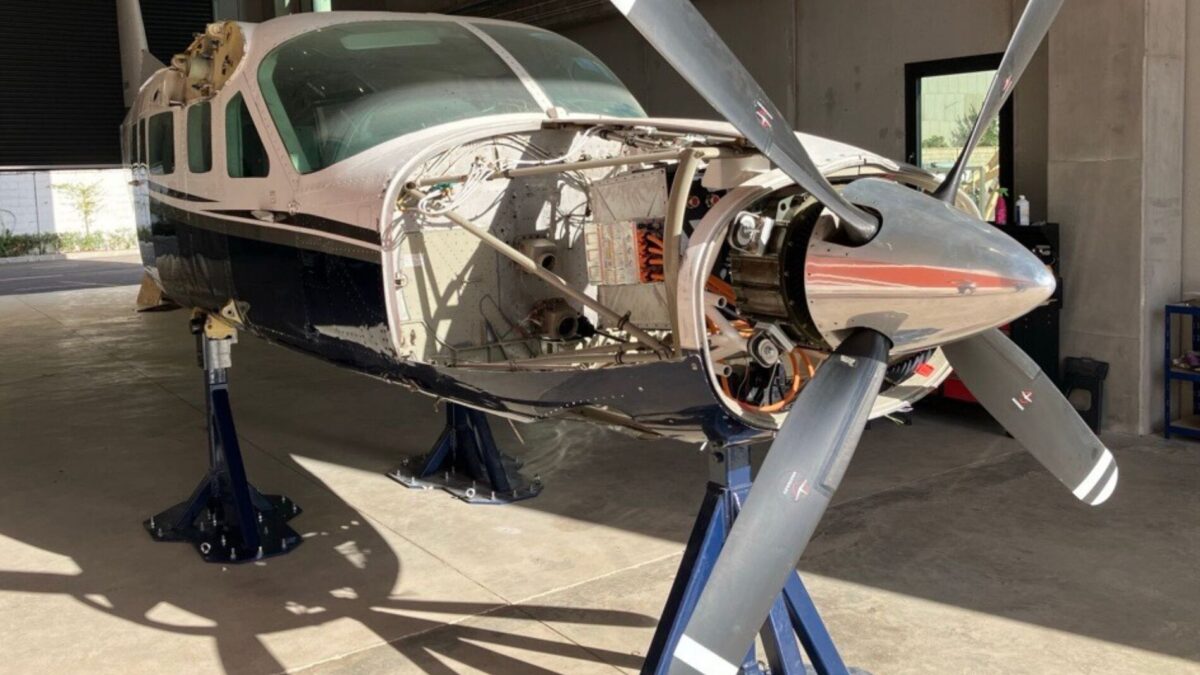

Dovetail Electric Aviation plans to have the first flight of its all-electric Cessna Caravan in 2027’s first-half and has shelved plans to have a hydrogen-electric powered version.
“We were targeting to do first flight by the end of this year, but some things are going slower than anticipated…so we plan to do it in next year’s first half,” says Dovetail Electric Aviation CEO, David Doral, who confirms the first flight will take place at Trebujena aerodrome, outside the Spanish city of Seville. Dovetail also plans to have its completion centre at this aerodrome.

Dovetail Electric Aviation CEO, David Doral
The company aims to secure a supplemental type certificate (STC) from the European Aviation Safety Agency (EASA) to replace the single turboprop engine, on the Cessna Caravan, by retrofitting an electric motor and battery energy storage system. The company had earlier been looking to add to the electricity from the battery with electricity generated from a hydrogen fuel cell.
But Doral says they have shelved the idea of using hydrogen, for the time being, because after examining the matter further, they decided a clearer, more straightforward path was to first develop the STC for an electric aircraft, as the regulatory framework is largely in place for this.
The regulatory framework for certifying a hydrogen-powered aircraft has yet to be developed, he says.
Airport infrastructure is also not in place to support hydrogen refueling, he adds.
EASA certified the all-electric Pipistrel Velis Electro in 2020. This is a light sport aircraft (CS-LSA) whereas Dovetail is working to get a STC for the Cessna Caravan, a transport category aircraft (CS-23). The European civil aviation regulator has yet to certify an all-electric CS-23 category aircraft, but several players such as Dovetail are working to be the first.
Dovetail, unlike some other players, has developed its own electric motor and battery energy storage system. Doral says the electric motor has a lower revolutions per minute (RPM) which means the propeller produces less noise, but still has the required thrust because the torque has been increased and optimized.
Doral says their battery energy storage system, Dovepack, is unique because it has a liquid-cooling system where the lithium-ion battery cells are immersed and in contact with the fluid. This fluid has no ability to conduct electricity, he says. But having the battery cells in contact with the fluid is the fastest and most efficient way to cool the cells to prevent thermal runaway, he adds.
The fact that the fluid is in direct contact with the cells, to providing cooling, means less liquid is required, so overall the battery energy system is smaller and lighter, says Doral, adding energy density is a key requirement for energy storage systems on aircraft.
A key consideration for electric aircraft is the landing weight because – unlike turbine powered aircraft – the airframe takes off heavy and also lands heavy.
Doral says they are in discussions with electric aircraft developers that are interested to install Dovepack. Dovetail is well-placed, because it understands what is involved in having this technology certified by civil aviation regulators, he says.
The Dovetail all-electric Cessna Caravan has a range of around 100km, with six to seven passengers, depending on wind conditions and flight altitude, says the company.
Doral says there is opportunity to extend the range if, for example, the company uses solid state batteries.
He also says the company plans to have a version where there is a turbogenerator, an electricity generator coupled to a small gas turbine, installed that supplies electricity direct to the electric motor or feeds into the battery. This will increase the range to 300km, he says, making it very useful for air cargo operators. Doral says they are speaking to operators of Cessna Caravan freighters and that Dovetail’s 20% owner, US company Air T, works with several turboprop freighter operators in the US. Air T inherited the stake when it acquired Australian regional carrier Regional Express.
Besides the Cessna Caravan, Dovetail also plans retrofit another top-selling turboprop aircraft – the twin engine Beechcraft KingAir.
Feature picture shows Dovetail’s Cessna Caravan fitted with the electric motor.