Australia’s Productivity Commission Says Short Regional Flights Cost 173% More Per Km Than City Routes
 Staff Writer,
12 Nov 2026
4 min read
Australia’s Productivity Commission says short regional flights cost on average 173% more per kilometre than major-city routes, and wants governments to put subsidised routes out to tender rather than support individual airlines.
The commission’s interim report, Determinants of Regional Airfares, was released on 11 November. The Albanese government commissioned the inquiry, with Treasurer Jim Chalmers and Transport Minister Catherine King releasing the terms of reference in October 2025. The commission has received more than 100 submissions.
“Many regional communities are frustrated by the high cost of flights,” says commissioner Catherine de Fontenay.
The report finds that, on average over 2023–2025, regional and remote airfares were 13% higher per kilometre than on major-city routes, but that the gap was much wider on short routes. On short regional routes, fares were 173% higher per kilometre, though 9% lower per passenger. Fares per kilometre were 120% higher on short remote routes and 102% higher on mining routes.
More than 90% of regional and remote passengers flew with the Qantas Group or Virgin Australia in 2025, and 72% of routes were served by one carrier only, the report says.
Operating costs make up about 91% of the fare on average, while profit margins average about 9%, broadly comparable with major-city routes, according to the report.
“The data shows that the main reason regional flights are more expensive is because they cost more to operate,” says commissioner Martin Stokie. “Half of regional and remote routes operate 10 or fewer flights per week and more than a third of their seats are empty. When operators have to spread the costs of running flights across a small number of passengers, they’re often choosing between charging higher fares or running at a loss.”
Profitability varies by route. On short remote routes with few passengers, profit margins can be lower than 5%, threatening their sustainability, while on mining routes profits are significantly higher than average, the report says.
The commission uses Kalgoorlie to Perth as an example, saying that if the fare is A$500–A$800 (US$340–US$550) per passenger, a family of four might pay A$2,000–A$3,200 (US$1,370–US$2,190) one way.
In its recommendations the commission says that where governments need to support essential routes the market cannot sustain, they should use a reverse auction to identify the minimum subsidy required, and should strengthen patient assisted travel schemes to reduce up-front costs for people travelling for medical care. “Government assistance should focus on keeping communities connected, rather than supporting particular airlines,” says de Fontenay.
The commission is taking further submissions until 22 December and will deliver its final report to the government in April 2027.
ANALYSIS AND BACKGROUND
The report lands as carriers have cut regional flying this year, citing high fuel costs and weak demand.
QantasLink has indefinitely suspended Adelaide to Mount Gambier from 18 May. QantasLink CEO Mark Dal Pra said demand had fallen below sustainable levels and that higher fuel prices had made the route no longer viable. Qantas Domestic CEO Markus Svensson later told a Senate inquiry that Qantas had also withdrawn Melbourne services to Albury, Wagga Wagga and Alice Springs after passenger numbers could no longer support the cost of operating them.
Link Airways suspended its Shellharbour (Wollongong) flights to Brisbane and Melbourne from 20 May, saying in a statement that the decision followed increased fuel costs and reduced demand.
Rex ceased Melbourne to Devonport and King Island to Burnie from 20 June, saying soaring fuel prices had driven a restructure of its Victorian and Tasmanian network. In October it indefinitely suspended Sydney to Orange and Sydney to Port Macquarie from 25 October. “The environment of entrenched high fuel prices driven by the ongoing conflict in the Middle East, together with lack of demand, do not make these routes commercially viable at this time,” Rex said in a statement.
Virgin Australia has indefinitely suspended four routes: Brisbane to Alice Springs from 14 July, Adelaide to Cairns from 1 August, and Brisbane to Uluru and Melbourne to Uluru from 24 and 25 October. “These changes are designed to ensure Virgin Australia is flying where demand is strongest and on routes that are commercially viable, while maintaining our commitment to regional communities,” the airline said.
Qantas temporarily suspended Coffs Harbour to Melbourne from May, but that service has since resumed.
Rex entered voluntary administration in July 2024 after expanding into capital-city routes, and administrators from Ernst & Young grounded its Boeing 737 intercity operation. According to the ABC TV, that operation was losing around A$1 million (US$685,000) a week.
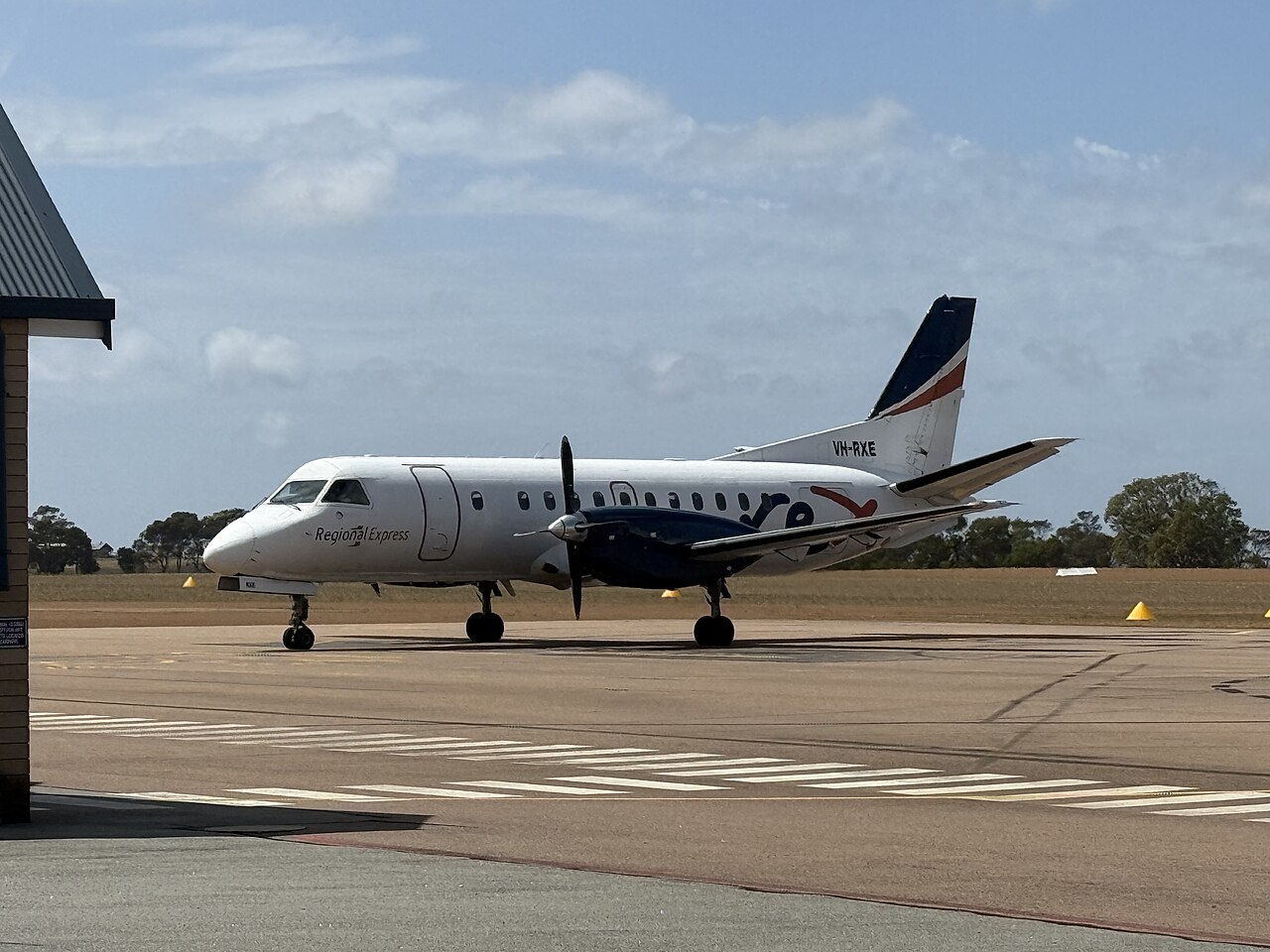
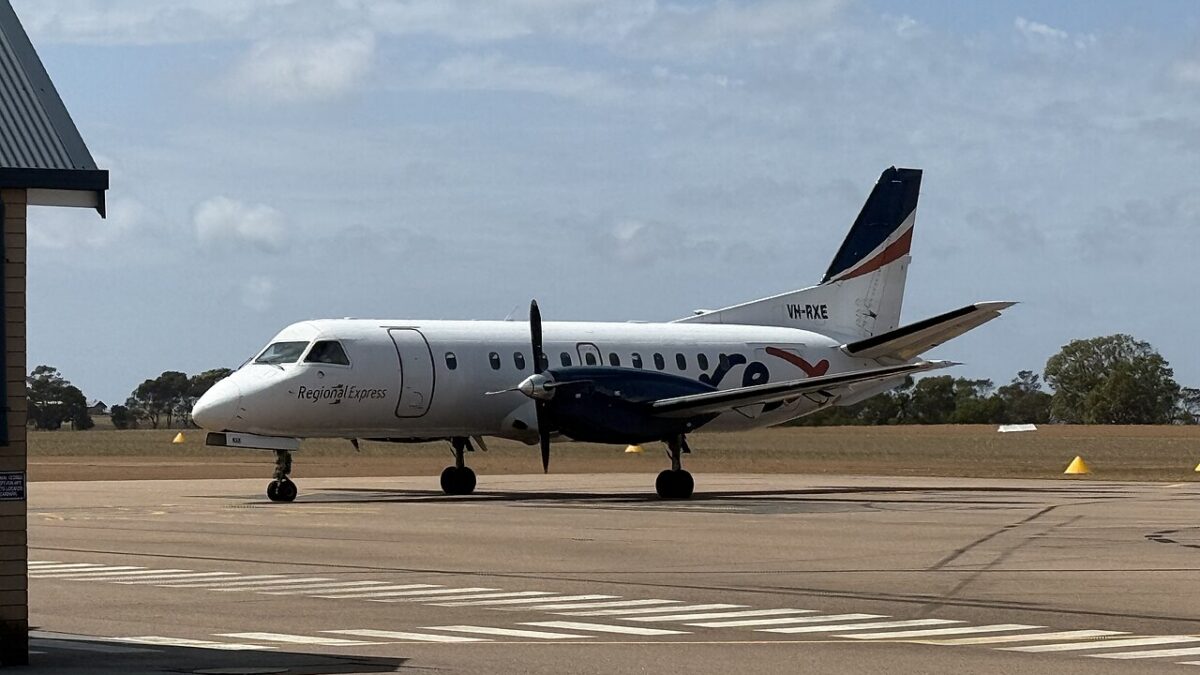
Picture shows a Rex Saab 340 VH-RXE at Esperance, Western Australia,
January 2025
Credit: from DaHuzyBru (Wikimedia Commons)